
Mathias E. Mnyampala, 1917-1969, et la construction nationale tanzanienne.
Mathieu Roy (author) · Mathias E. Mnyampala (subject)
Open access · Volume 1Open access · Volume 2
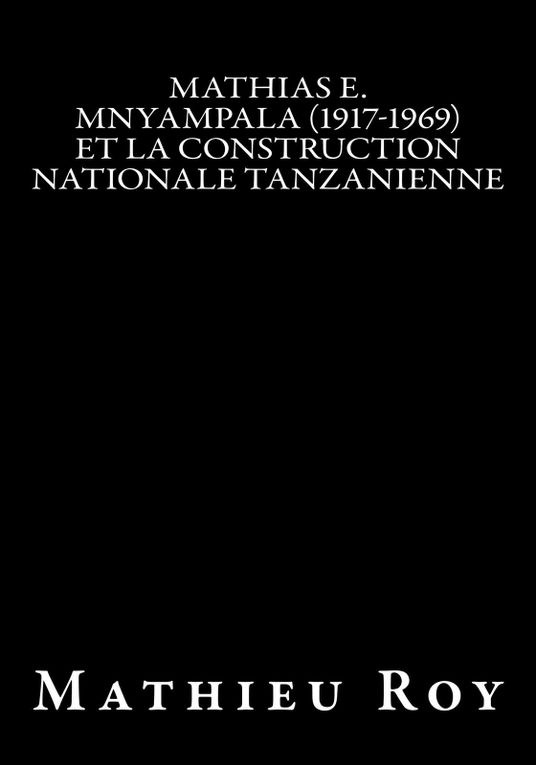
Mathias E. Mnyampala (1917–1969) et la construction nationale tanzanienne (Volumes 1 & 2)
About this Research This publication brings together the two volumes of a doctoral dissertation in African Studies, specializing in Swahili language and literature. It offers a comprehensive study of Swahili poetic metrics and the role of poetry in Tanzanian nation-building through the works of Mathias E. Mnyampala.
Volume 1: Définitions de la poésie d'expression swahilie
Theoretical Framework and Methodology This section defines a formal analysis tool based on available data, aiming to address the extraordinary heterogeneity of existing theoretical frameworks regarding Swahili classical poetry. Some authors, primarily writing in Swahili, perceive a quantitative syllabic foundation for Swahili metrics called “vina na mizani,” while others view it as accentual (similar to English). Still, others associate it with syllable length (similar to Arabic classical poetry), allowing for the possibility of mixed metrical systems. The goal of this research is to bring order and identify the actual poetic creation principles used by Swahili authors, exploring how they manipulate these parameters to create new genres.
Findings on Swahili Metrics By thoroughly examining the theories and their corresponding data, we observe that Swahili poetry aligns strictly with Bantu linguistics. It relies on quantitative syllabic metrics (rhymes and syllable count), precisely as asserted by Swahili poets themselves. Accents play a role at a micro-level, but theories about rhythmical feet do not align well with the raw data—i.e., the poems chanted, sung, or read in Swahili—when cross-checked using sound analysis software. Ultimately, this volume raises a critical epistemological question: Why have these Swahili-speaking poets been marginalized or silenced by academia when describing the rules of their own art?
Volume 2: Conservatisme et africanisation
Tradition and Poetic Innovations Building upon the metric analysis established in the first volume, the second volume focuses on the contextualization of the Tanzanian poet Mathias E. Mnyampala within the broader Swahili poetic tradition. We explore how Mnyampala fits into and shapes Swahili literature, observing that his poetic innovations remain formally and deeply rooted in classical Swahili poetry, specifically within the “vina na mizani” tradition. Furthermore, the research highlights how he masterfully integrates elements from his native Wagogo traditions—most notably the practice of “ngonjera” (the staging of palaver as a jurisdiction of speech)—alongside external influences such as European theatre and Christianity.
Political and National Context Through Mnyampala’s extensive body of work, and by extension the cultural policies of the newly established Tanzanian socialist state, a strong sense of continuity is emphasized. His poetry served as a crucial intellectual and cultural tool in the broader project of constructing a unified Tanzanian nation.
 Mathias E. Mnyampala (1917-1969) et la construction nationale tanzanienne: Vol. 1: Définitions de la poésie d'expression swahilieOrder the paperback, printed on demand and shipped worldwide.amazon.fr
 Mathias E. Mnyampala (1917-1969) et la construction nationale tanzanienne: Vol. 2: Conservatisme et africanisationOrder the paperback, printed on demand and shipped worldwide.amazon.fr
Mathias Eugen Mnyampala (1917-1969) est un écrivain, juriste et poète d’expression swahilie tanzanien. De langue maternelle cigogo, il apprend le kiswahili et l’écriture par les textes de la Bible à l’âge de quinze ans. A partir de l’Indépendance du Tanganyika en 1961, il engage son art poétique au service du développement du kiswahili, la langue de la nouvelle nation. Dans cette destinée particulière d’un jeune pasteur de l’Ugogo du centre de la Tanzanie, qui devient un maître reconnu par ses pairs de la poésie d’expression swahilie et un artiste national, se reflète la problématique de la construction d’une nation tanzanienne. Les processus créatifs ex materia de Mathias E. Mnyampala, ni classiques ni modernes, sont une troisième voie de la composition poétique qui est décrite par une approche métrique formelle. En parallèle d’une nationalisation des mètres classiques de la poésie d’expression swahilie dans les années 1960, il est question d’une africanisation de la culture nationale que ce travail analyse.
Les deux volumes de cette thèse de doctorat offrent des extraits des Archives Numériques de Mathias E. Mnyampala (ANM). Dont des manuscrits inédits comme celui d'Azimio la Arusha na Maandiko Matakatifu « la déclaration d'Arusha et les saintes écritures » ou encore Mashairi ya Vidato « Mashairi en entailles » ainsi que d'autres documents inédits.
Mathias Eugen Mnyampala (1917-1969) was a Tanzanian writer, lawyer and poet who wrote in Kiswahili. With Cigogo as a mother tongue, he learned to read and to write in Kiswahili at the age of fifteen in a local Roman Catholic Bible school. Since Independence of Tanganyika in 1961, he put his poetic art at the service of the development of Kiswahili, the language of the new nation. The issue of the Tanzanian nation building is reflected in this particular destiny of a young pastor from Ugogo in the center of Tanzania becoming a master of Kiswahili poetry recognized by his peers as well as a national artist. His ex materia creative processes, neither classical nor modern, are a third way of verse composition that the formal approach describe. Parallel to the nationalization of the meters of classical Kiswahili poetry in the 1960’s, it comes to the africanization of the national culture that this work analyzes.
The two volumes of this doctoral thesis offer some extracts of Mathias E. Mnyampala's Digital Archives (MDA) including unpublished manuscripts like Azimio la Arusha na Maandiko Matakatifu "the Arusha Declaration and the Holy Scriptures" or Mashairi ya Vidato "Mashairi in Notchs" and other unpublished documents.
 Zenodo. Vol. 1: Définitions de la poésie d'expression swahilie. (French Edition)Free open-access PDF (CC BY 4.0), archived on Zenodo for long-term preservation.zenodo.org
 Zenodo. Vol. 2: Conservatisme et africanisationFree open-access PDF (CC BY 4.0), archived on Zenodo for long-term preservation.zenodo.org
 Archive.org Vol. 1: Définitions de la poésie d'expression swahilie Free open-access PDF (CC BY 4.0), archived for long-term preservation.archive.org
 Archive.org Vol. 2: Conservatisme et africanisationFree open-access PDF (CC BY 4.0), archived for long-term preservation.archive.org
 Google Books. Vol. 1: Définitions de la poésie d'expression swahilie Read a free preview on Google Books.books.google.fr
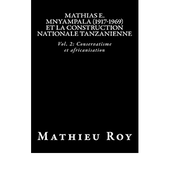 Google Books. Vol. 2: Conservatisme et africanisationRead a free preview on Google Books.books.google.fr
 BnF Catalogue généralcatalogue.bnf.fr
MATHIAS E. MNYAMPALA (1917-1969) : POÉSIE D'EXPRESSION SWAHILIE ET CONSTRUCTION NATIONALE TANZANIENNEOriginal PhD Thesis. Free open-access PDF (CC BY 4.0).tel.archives-ouvertes.fr